What is an AI agent — in plain words
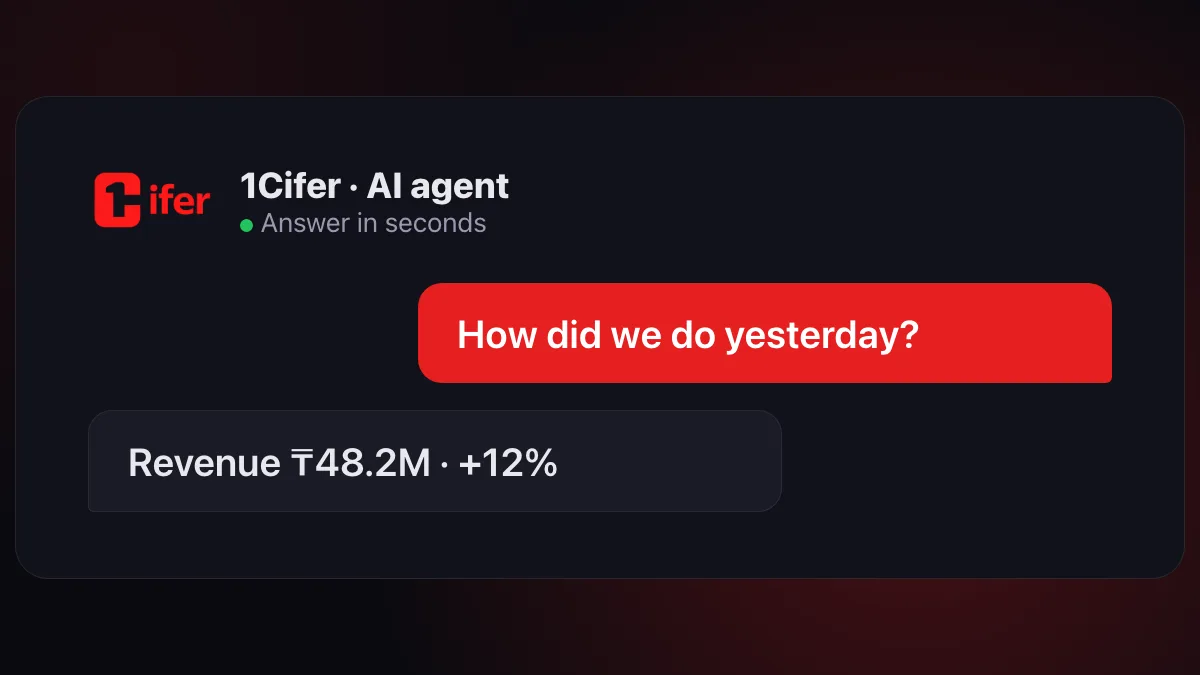
An AI agent is a program built on a language model that doesn't just answer questions — it connects to your tools and completes tasks: finds figures in your accounting system, prepares documents, sends emails. You describe the task in plain language — the agent decides on its own which tools to use and in what order.
How an AI agent differs from a chatbot and from ChatGPT
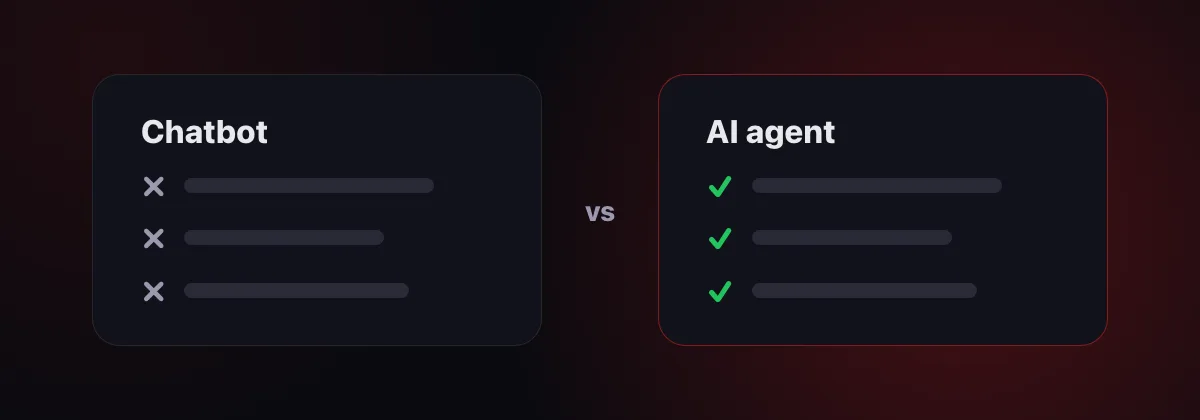
A regular chatbot follows a pre-written script: "press 1 to check your balance". ChatGPT talks freely about anything, but answers from the model's general knowledge — it knows nothing about your sales and your stock levels.
An AI agent is a third kind. It has access to your systems and "hands" to use them:
| Chatbot | ChatGPT | AI agent | |
|---|---|---|---|
| Understands a free-form question | No — script only | Yes | Yes |
| Knows your company's data | Partly, what was hardcoded | No | Yes — via connected systems |
| Performs actions | From a list of buttons | No | Yes — multi-step tasks |
| Example question | "Menu" | "What is EBITDA?" | "Which invoices are awaiting payment and do we have enough cash?" |
How an AI agent works
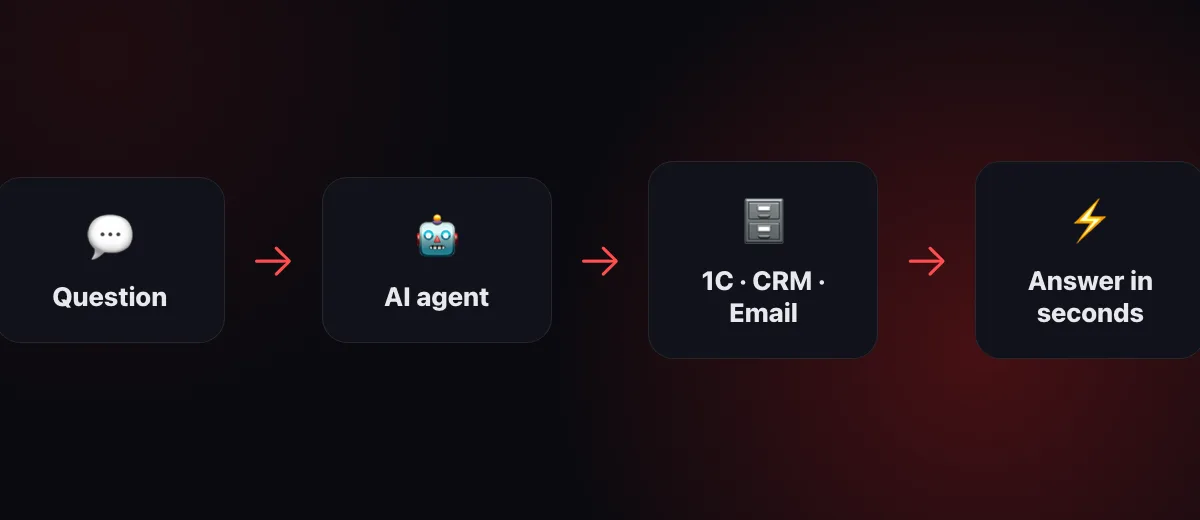
Inside any agent there are four parts:
- Language model — the "brain" that understands the question and plans the steps.
- Tools — connections to your systems: 1C, CRM, email, spreadsheets, databases. The model calls them the same way an employee opens programs.
- Memory and context — the agent remembers the conversation and knows your company's context: who you are, what data you have, what you asked before.
- Control layer — rules for what the agent may do on its own and what only with a human's confirmation.
Asked "how much did we earn this month?", the agent decides for itself: go to the accounting system, gather revenue by location, compare it to last month — and answer in one sentence with the figures. That used to be a report someone spent half a day on.
What an AI agent does in business
Typical tasks agents are already taking over:
- Answers from your data: revenue, stock levels, receivables, deal statuses — in seconds, no waiting for a report.
- Documents: prepare an invoice, a commercial proposal, a project summary.
- Email and communications: sort the inbox, draft a reply, follow up on overdue items.
- Monitoring: spot an anomaly in expenses or a mismatch in documents before it becomes a problem.
- Routine between systems: move data from an email into the CRM, from a spreadsheet into accounting.
The key shift: with an agent, a business owner no longer depends on gatekeeper employees — the company's data is available directly, at any moment, in plain language.
Is it safe to give an agent access to your data?
A properly designed agent is built around human control:
- access to systems is read-only by default;
- important operations — payments, sending, deleting — are confirmed by a human;
- the agent’s action history is under your administrator’s control: you can see what it opened and why it answered that way.
How to try an AI agent in your company
- Pick one area — finance or sales, for example. Don't try to automate everything at once.
- Connect the tools where your data lives: 1C, CRM, email, spreadsheets. On ready-made platforms this takes minutes through integrations, no programmers needed.
- Start with questions, not actions: for two weeks, just ask the agent about your data. It's safe and shows the value right away.
- Add actions gradually — with confirmation at every step, until trust is established.
Frequently asked questions
How is an AI agent different from ChatGPT?
ChatGPT answers from the model's general knowledge. An agent is connected to your systems and answers from your data, and on request performs actions: prepares a document, sends an email, creates a task.
Do I need a programmer to roll out an agent?
For ready-made platforms — no: integrations connect in minutes, and you talk to it in plain language. Programmers are only needed for custom connections via API.
What data does the agent see?
Only what you connected, within the limits you set. Read-only by default; you confirm important actions; the action history is under your administrator’s control.
How much does it cost?
Ready-made solutions are sold by subscription. For example, 1Cifer plans start at 150,000 ₸/month with token-based billing — each request uses tokens by complexity and volume.
Read next: Business automation: where to start · AI Accountant: A New Level of Accounting Quality
Try an AI agent on your own data
1Cifer connects to 1C, Bitrix24, r_keeper, email and spreadsheets — and answers questions about your company's data in seconds. Russian and Kazakh, web, Windows and macOS.
Request trial access